As I say, these were helpful lessons for me. Not only had I learned that ‘changes’ were a part of Josie, and that I should be ready to accommodate them, I’d begun to understand also that this wasn’t a trait peculiar just to Josie; that people often felt the need to prepare a side of themselves to display to passers-by — as they might in a store window — and that such a display needn’t be taken so seriously once the moment had passed.
I’d never before seen anything that gave, all at once, so many signals of anger and the wish to destroy. Its face, its horns, its cold eyes watching me all brought fear into my mind, but I felt something more, something stranger and deeper. At that moment it felt to me some great error had been made that the creature should be allowed to stand in the Sun’s pattern at all, that this bull belonged somewhere deep in the ground far within the mud and darkness, and its presence on the grass could only have awful consequences.
‘It’s okay,’ the Mother said. ‘He can’t touch us. Now come on. I need a coffee.’

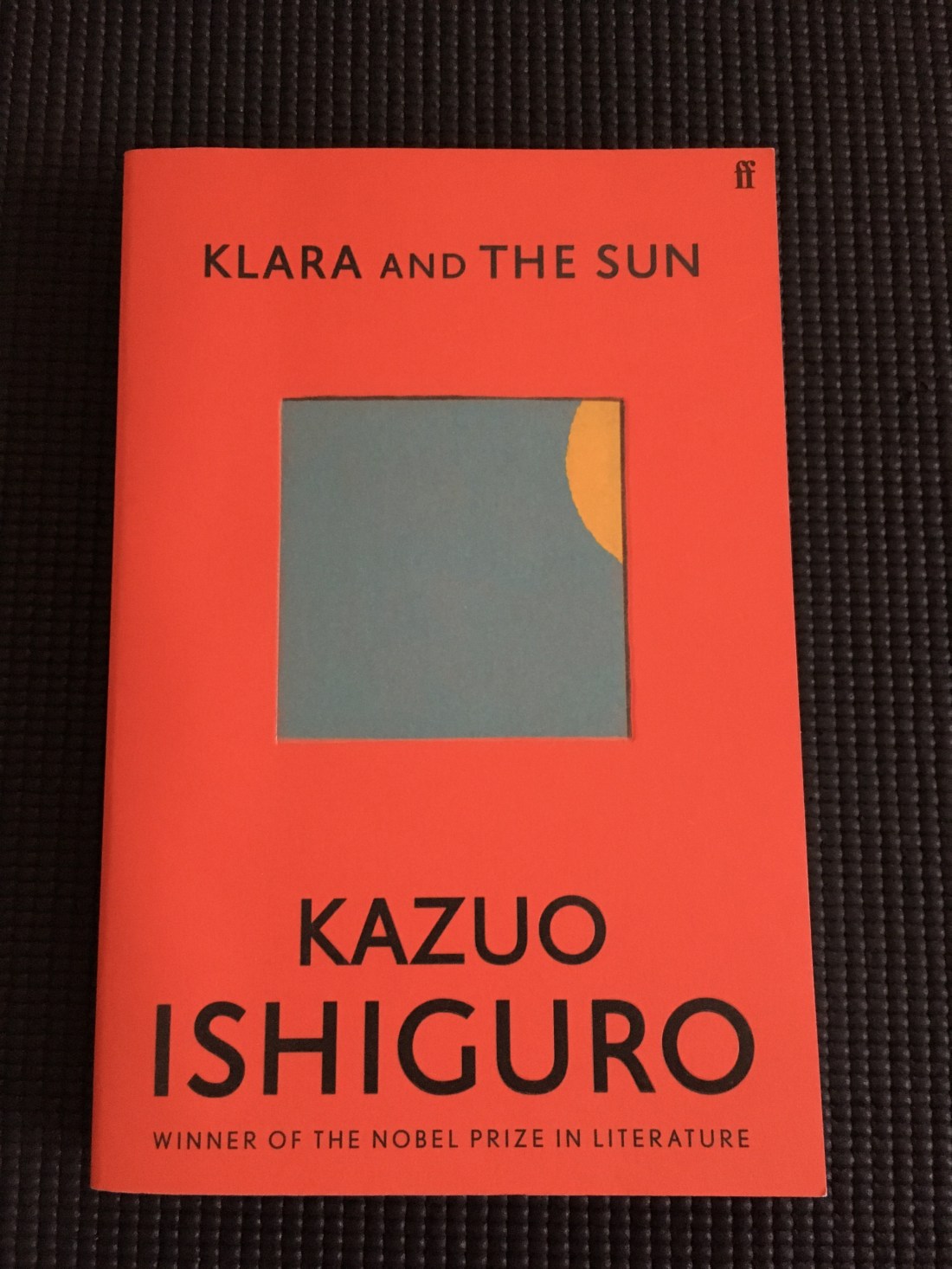
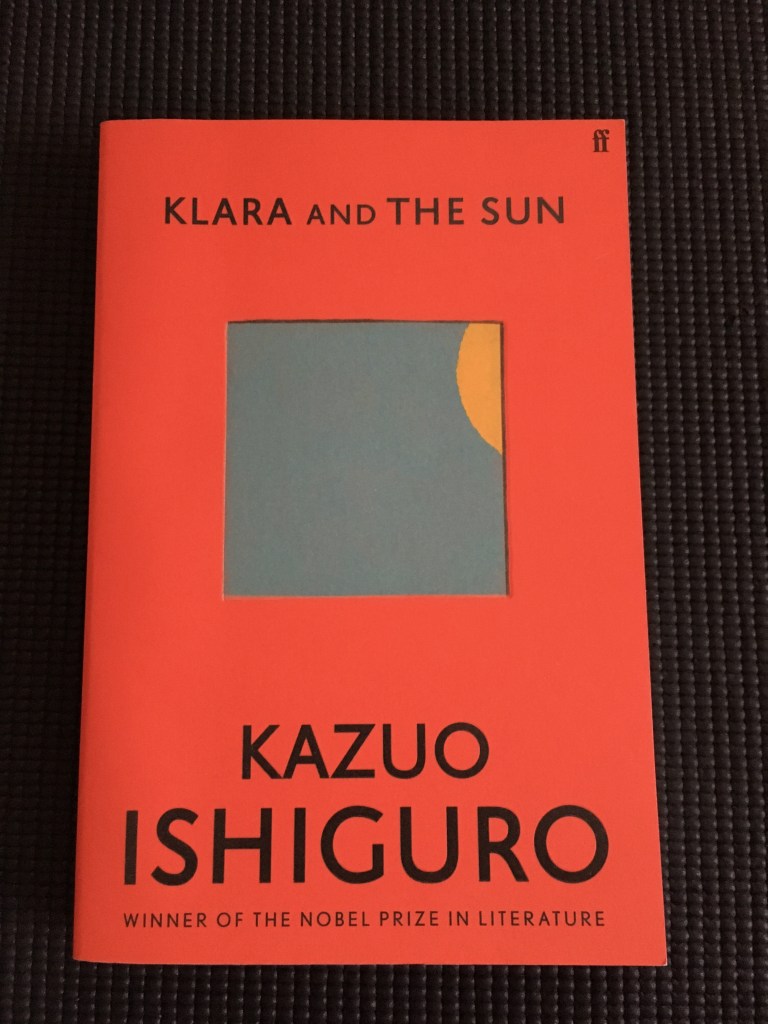
Klara and the Sun by Kazuo Ishiguro, purchased at the Auckland Writers Festival (2021)
Estrangement, Love and Soul
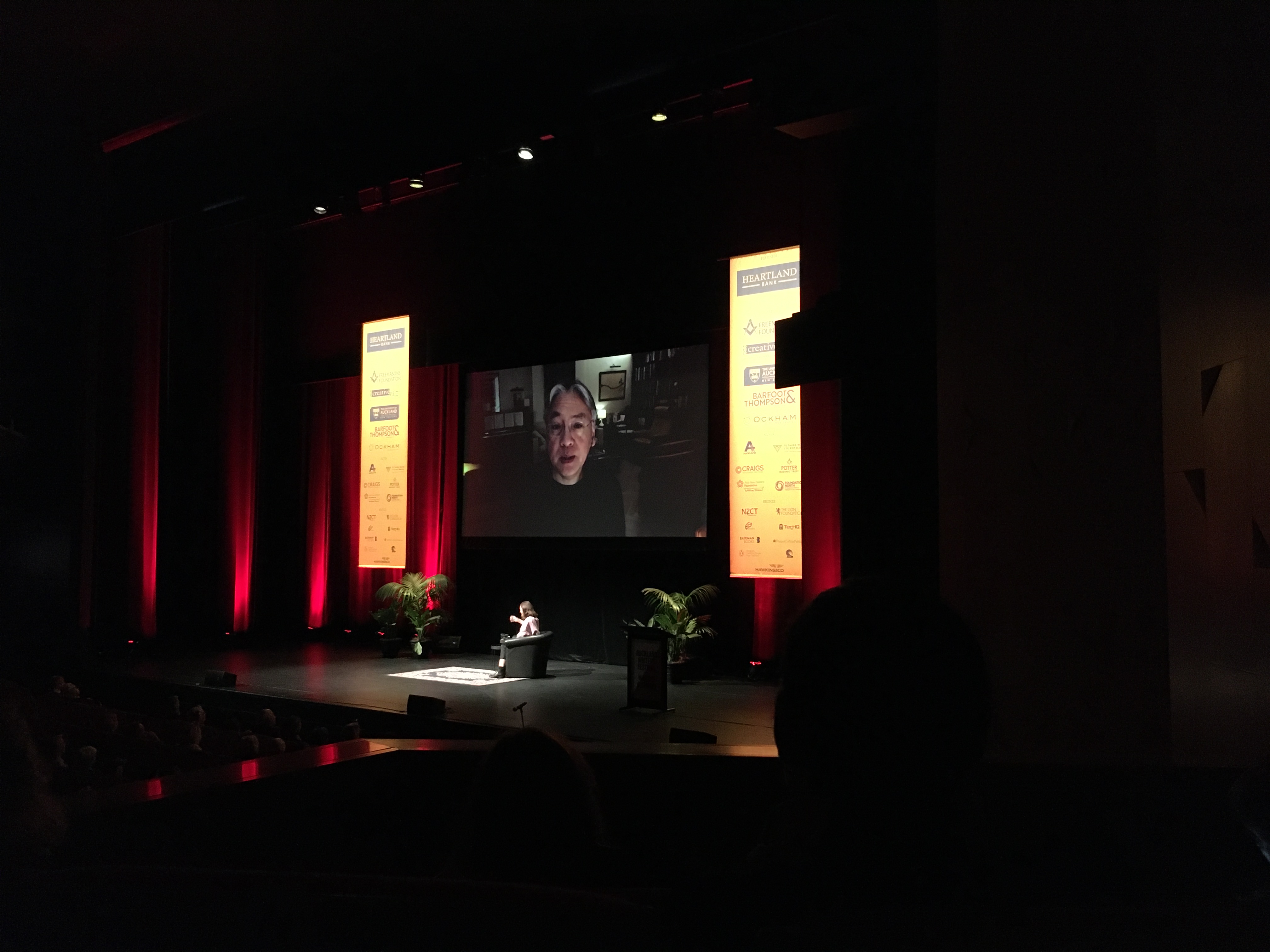
After weeks of pleading and bargaining for leave with my rota-coordinator, eventually working two back-to-back long shifts and swapping a weekend on-call with a colleague in order to free up the dates of the Auckland Writers Festival, I was determined to attend as many sessions as possible. Most were booked out by the time my leave was approved, but there were still tickets for the livestream conversation with Kazuo Ishiguro, and it was this stroke of serendipity that led me to purchase Klara and the Sun.
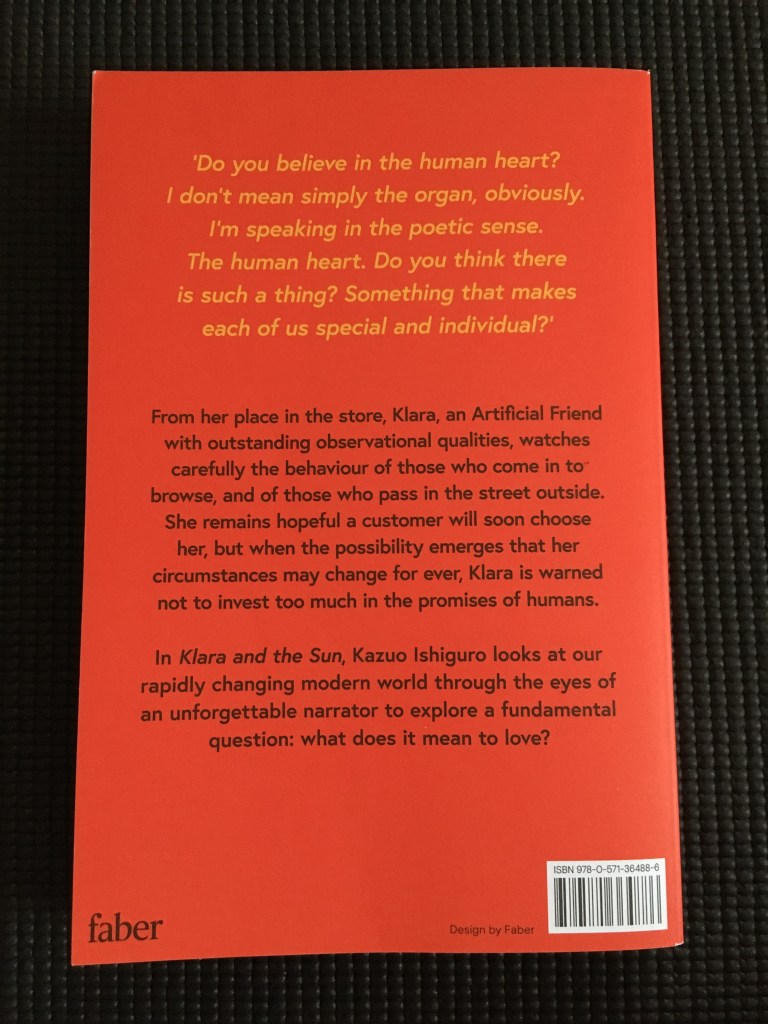
I am not particularly familiar with Ishiguro’s work. I have read Never Let Me Go and watched the adaptation of Remains of the Day. Both provoked in me such an uncomfortable feeling that had I not attended the festival interview, I think it is unlikely I would have spontaneously picked up Klara and the Sun at this particular time of my life. I also don’t think I would have selected it on the basis of its blurb (see above), although I do very much like its cover (cleverly inside and out). But I enjoyed the event, which covered personal and philosophical aspects of his life and writing, and it made me curious. He was a pleasing interviewee: thoughtful and well-spoken, but also very gentle and gracious. I was touched by the fact that he had clearly taken pains to research his interviewer’s background, referencing her work and achievements on several occasions.
He spoke of the craft and struggles of writing, of building plausible characters from the point of view of their relationships, of the importance of framing a narrative in a relatable way in order to offset a more experimental backdrop. He spoke also, at length, to the question of being human, what a soul or a heart might be, and how he returns to this matter over and again in each of his books. The conclusion that Klara reaches, he said, is not one that he necessarily shares.
And on the whole, these were the elements within his book that I enjoyed. I liked Klara as a narrator, I liked her story. I appreciated the characters of Josie and her mother in particular. I am interested in the underlying premise of the book and I appreciated the different perspectives from which it was explored. Estrangement – of the reader, of the characters within – is key to the way in which Ishiguro presents these conflicting and ultimately unanswerable questions. Moments of delightfully wry humour are only one of the many by-products.
There is a reasonable amount of dialog in the book, some of which I found jarring. I have heard Ishiguro’s prose described as restrained and mundane. It is, and I am not naturally drawn to that. What else? I expected, I suppose, a more heightened sense of pathos. There are certainly moments of this – a poignant description of Josie crying, several oblique but haunting references to the way in which her mother coped with the death of her older sister – but I found the overall tone and ultimate resolution much lighter and more optimistic than I anticipated. Ironically, although these were the elements that I found unsettling in his previous works, I do not think I enjoyed the book better for their absence. It is telling to me that it was Klara’s ending, rather than Josie’s, that I found more satisfying.
I picked up Klara and the Sun at a time when I was feeling burnt out. In this context, it was exactly what I needed. I enjoyed the otherness of its setting and the relative simplicity of the perspectives it puts forward. I was interested in its story – which I think is one of the best things that can be said about any book. I suspect that at another time in my life I may have found it less captivating, but that is of course a reflection upon me, not upon the book itself.
If you’ve read the book already, I’m curious what you think about the blurb and/or how you might re-write it yourself? Comment below and let me know!
In the end, stories are about one person saying to another: This is the way it feels to me. Can you understand what I’m saying? Does it also feel this way to you?
Kazuo Ishiguro, Nobel Prize in Literature Lecture 2017*
(*you can find the Nobel Prize lecture on Youtube if you’re interested, and the transcription is also readily available online)

